

The Rough Table no. 4
Notes on Living / The Ranking / Part One


they carry it in the skull
the invisible rung –
who gets the fresh cup
There is a ladder most people carry in their head. They don’t see it. They have never seen it. But it organizes the entire room – the whole gorgeous ugly room with its chandeliers and its termites, its heated floors and its lead paint, its wine and its waiting.
It decides who you kneel for. Whose silk you bow to receive. Whose ring you press your mouth to. Whose feet you would wash and call it devotion. Who gets the careful voice, the good posture, the eyes that widen when they enter the room. And it decides who you speak to with your whole boot on – who does not rank high enough for you to watch your mouth. Who you bring the plate to and who eats what falls from it.
I am a common woman noticing things.
This is the oldest technology of empire. Older than the musket. Older than the deed. Older than the cross nailed above the door of a stolen house. This is how you rank a soul.
A woman with a trust fund in San Francisco and a landlord’s son in Mumbai and a baron’s daughter in Provence – it is the same ladder. It speaks every language. It adjusts for currency. It perfumes itself differently depending on the century – frankincense for the church, bergamot for the drawing room, synthetic musk for the open-plan office. The scent changes. The structure doesn’t. It ranks you before you open your mouth.
The whole country is a ward. Everybody walking around inside the sickness like it’s climate. Like the fever is just the temperature of the room. The ranking is a pathology and the diagnosis has been on the table for five hundred years and no one is picking it up.
before the vertical
every continent knew
the round way to eat
Before the ladder, there was the circle.
For thousands of years, on every continent, human societies organized around a different question. Not who is above but what do I owe. The Lakota. The Quechua. The Yoruba. The Sámi. The Ainu. The Evenki of Siberia. The Aboriginal peoples of Australia. The Māori. The peoples of the Amazon and the Andes and the Arctic. All of them, independently, across oceans and mountain ranges and ice fields, arrived at the same understanding – that life is sustained by reciprocity. You take from the river, you give something back. You eat the animal, you honor what it cost. The guest at your fire is not beneath you. The guest is the reason the fire exists.
In many of these cultures, the worst thing you could say about a person was not that they were poor. Not that they were broken. Not that they failed.
The worst thing you could say was: that person lives as though they have no relatives.
It meant you moved through the world without accountability. Without obligation to the people who came before you or the ones who would come after. It meant you consumed without offering. Took without returning. Treated the world as if it existed to serve you and would not remember what you did to it.
And relatives did not mean only human. The river was a relative. The elk. The bee. The mountain that had been there before your language had a word for mountain. To be born human gave you authority over nothing. It meant you belonged to the web – not above it. The colonizer looked at the same web and ranked it. Ranked the river below the mill. The wolf below the rifle. The mountain below the mine. The ancient tree below the saw. They ranked everything that breathed and everything that didn’t and put themselves at the top and called it dominion. Saw lumber. Saw acreage. Saw what could be extracted before the consequences landed on a generation not yet born – on a river not yet dammed, on a species not yet named extinct, on a sky not yet clogged with what the living threw away because they could not see past their own plate.

They are still doing it. This is not an old story. The last thylacine died in a cage in Tasmania in 1936 – the last of its kind, alone on a concrete floor because the colonizer ranked it as pest and paid a bounty for every body. They will do it to extinction. They will do it to the last bee, the last glacier, the last old-growth grove, and they will call it cost of progress and they will sleep. The ending of a species is an acceptable line on their spreadsheet. The ending of a river is shrug in a conference room.
Even those who were given everything – houses, money, a whole life handed to them by someone who is now dead – who accept the gift and erase the giver. Who do not place the dead in any room of honor. Who move forward into their new life as though it was always theirs. As though it grew out of their own brilliance. As though nobody bled for it.
That was the definition of a ruined person. Not empty pockets. Empty reciprocity.

bible in one hand
ledger in the other –
the ship smells like god


Then the ladder arrived.

It came with empires that needed to sort human beings the way merchants sort grain: premium, standard, feed. Rome had it. Feudal Europe had it. The church codified it – god at the top, then kings, then lords, then men, then women, then children, then animals, then soil. The Great Chain of Being. Every living thing assigned a rung. Ranked. And the ranking determined what you deserved – how much food, how much voice, how much dignity, how much of your own body you were allowed to keep.

The colonizer carried the ladder across oceans. It arrived on every shore with a bible in one hand and a ledger in the other. It replaced the circle with a line – a vertical line, god at the peak and the dark-skinned, the colonized, the women, the animals, the earth pressed flat at the base. And it smelled like gunpowder and communion wine and the wet wood of ships that carried human cargo. It smelled like salvation. It smelled like money.

And it worked. It is working. Right now. While you read this someone is being ranked in a hallway. In a waiting room. In a field with their hands in the dirt. It is enforced with whips. With doctrine. With boarding schools that cut the braids off children and tell them their language is a sin. With laws that say a woman is property. With maps that erase nations and call the theft discovery. The ranking is not historical. The ranking is breathing. You can smell it the way you smell a root that has gone to rot beneath clean soil – everything looks manicured on the surface and the decay is underneath, threading through every capillary of the culture like a systemic infection no one will name.
the clerk stands for one
keeps typing for the other –
nobody taught this
The ladder is still in the room. It is in every room. It is the room.
A doctor enters and the room rearranges itself – the spines straighten, the shoulders rotate toward her, the pupils dilate. The body opens the way a plant opens toward whatever it has decided is the sun. A janitor enters the same room and the room does not move. Does not look up. Does not shift. The janitor has a name and hands that smell like bleach and a bus ride that takes two hours each way, but the room has already ranked him and the ranking says: continue.
You can see it in the jaw. In the direction the pupils move. In the cortisol rising in one interaction and flattening in another. In the way the chest turns toward one body and past the next as if the next were a coat rack. A luggage cart. A doormat. Most people don’t watch. I watch. You know who picked the grapes for the wine you are drinking at the dinner where you become precious about inequality – so tender, so concerned, so careful with your language – while the man still bent in the field has never once been inside your careful mouth. But his body knows yours – it has to. Not noticing is a luxury and he has never had it. Not noticing is a privilege the ranking reserves for the top of the ladder. His body reads yours the way prey reads the field. That is the symptom.
This is the malady. This is the ward. Every room a triage. Every interaction a symptom. And every person inside it performing wellness while the infection runs the floor.
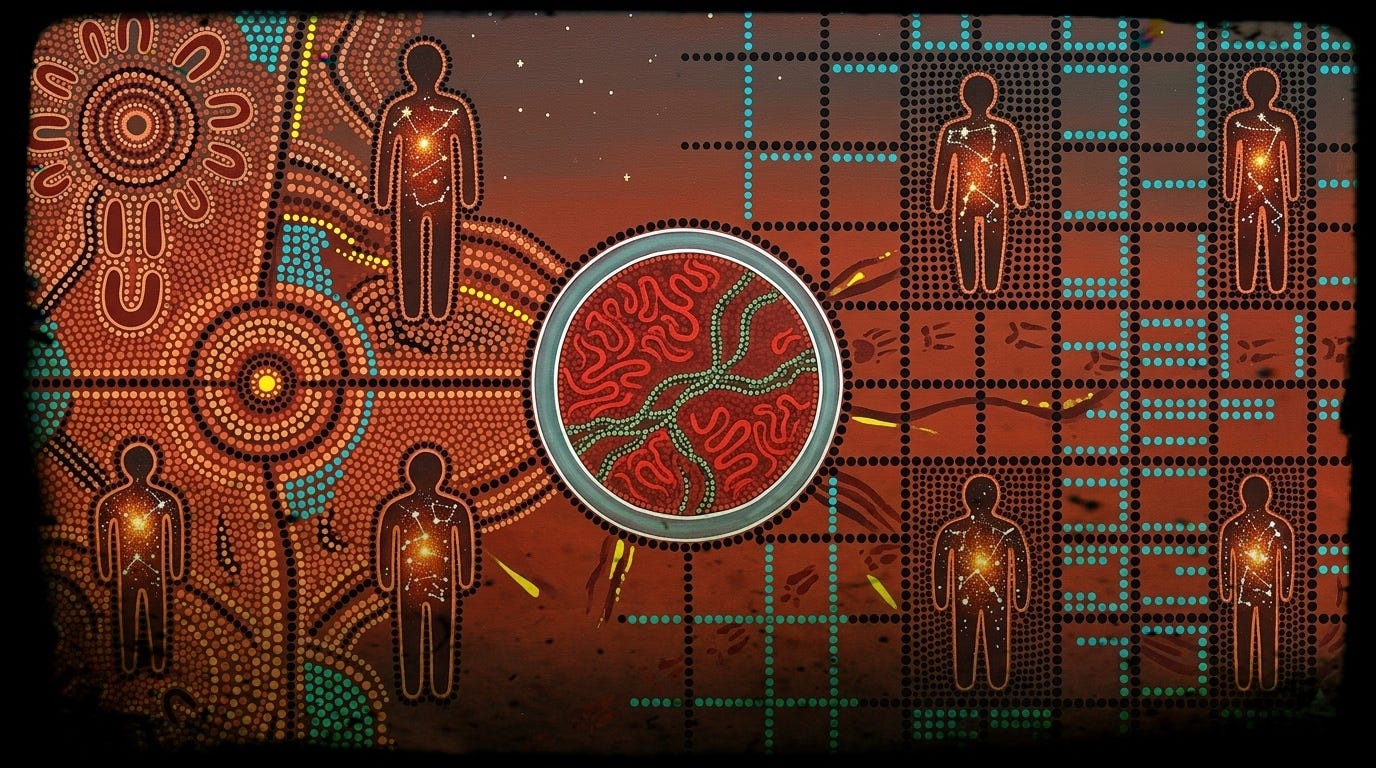
a spreadsheet decides
what the poor are allowed –
the official calls it protein
Somewhere right now, in a room with no windows and fluorescent light, someone is sitting behind a desk deciding what the poor are allowed to eat. They have a spreadsheet. They have a budget. They are calculating how far a coin – a dollar, a peso, a rupee, a franc – can stretch. They are calling the lowest grade of grain sufficient. They are packaging the cheapest cut and labeling it protein. They are building a meal plan for people they have never shared a meal with and have no intention of knowing. They will go to lunch after this meeting and order something else entirely. They will not notice the irony. The irony is not built into their spreadsheet.
This is how a society rations dignity – through the plate. Through the fork. Through what is placed before you and what is withheld. Through what the hand is allowed to reach for.
In India, the caste system organized food the way it organized everything else – by rung. Brahmins took the purest ingredients. Dalits received offal – intestines, feet, organs, the parts deemed unclean by those above. In the American South, the plantation house kept the prime cuts and sent the scraps to the slave quarters. The fatback. The neck bones. The pig feet. The intestines. The parts the master’s house threw out as garbage. And what arrived in those kitchens got made into something. Got made into food that kept people alive. The way an herbalist takes the weed the lawn service poisons and makes a medicine the pharmacy doesn’t sell. This is scrap cooking. This is what the bottom of the ranking eats.
And here is the obscenity – the truly gorgeous obscenity of it, the part that should make your throat close:
The same people who designed the system – who calculated the bare minimum, who built the food deserts, who decided what the poor could reach on what shelf in what neighborhood – turn around and shame people for eating it. They designed the plate. Then they ridicule the plate. They built the budget and stocked the shelves and made sure whole neighborhoods had nothing else. Then they point at the cart and call it a lifestyle choice. They point at the body and call it a lack of discipline. They point at the mother in the checkout line and they have already ranked her by what is in her hands. They engineered the scarcity. Then they moralized about the scarcity. They made the cage. Then they critiqued the posture of the animal inside it. They salted the soil and then mocked the garden for not growing. This is not irony. This is the ranking functioning exactly as intended. This is the perfume on the wrist of the hand that signs the budget. This is the sickness prescribing itself as the cure.
There is a Spanish film called El Hoyo – The Platform – directed by Galder Gaztelu-Urrutia, 2019. Watch it. It is the ranking made literal. A vertical prison where the people at the top eat first and the people at the bottom receive what remains. By the time the platform reaches the lowest floors there is nothing left but grease and bone and the smell of what someone else enjoyed. Perhaps you ate at the top of the platform last night - you at the table, the dishwasher at the bottom, both of you in the same building, breathing the same grease, and only one of you tasting the meal.
In older cultures – cultures the ranking tried to crush – food worked differently. The guest received the best portion. Even when there was almost nothing. Especially when there was almost nothing. The last cup of coffee was given away. The elder ate first. A woman with nothing to offer but rice and butter would make that rice and butter into the finest thing she could – the way you compound a tincture from the last of what the garden gave you, the way you distill the final harvest into something so concentrated it could heal or it could burn – and place it before you as though you were the reason the fire was lit. Because you were. In those cultures, hospitality was not generosity. It was architecture. It was the load-bearing wall of the whole structure. You fed the guest because the guest was not below you. The guest was the center. The meal was the prayer. The table was the altar. And no one ranked the hands that made it.
Part two next week



hard truth here
so much to distract us from the truth
dope. I gotta watch that film.